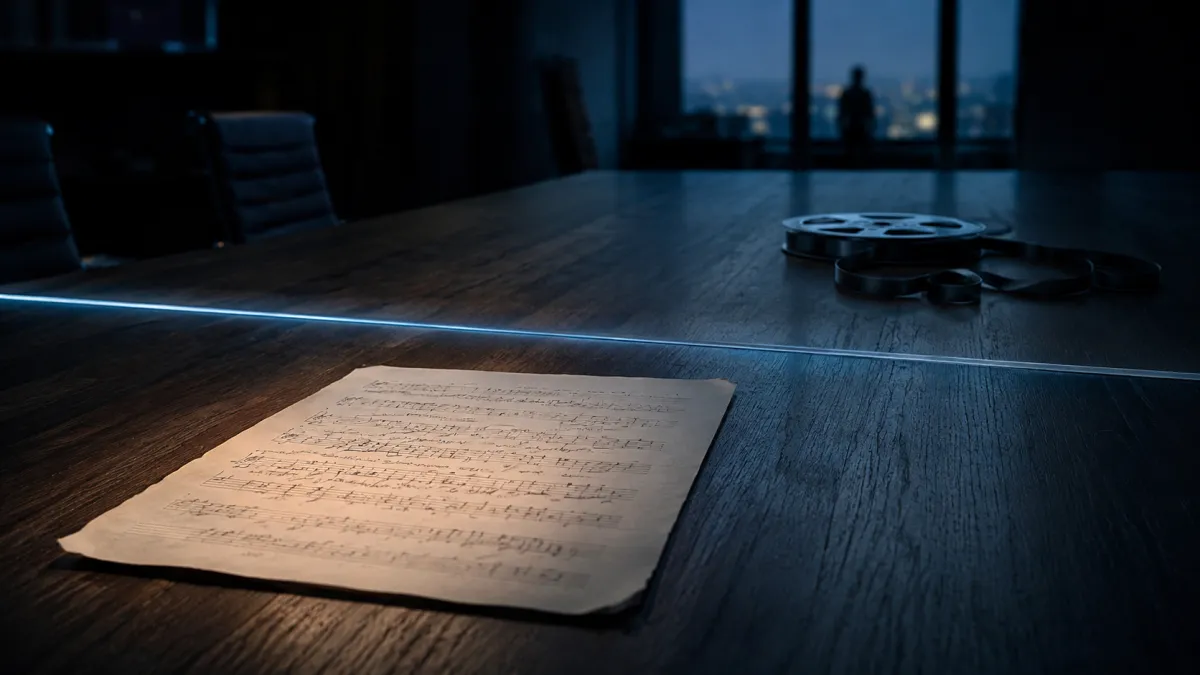
She did not own the recordings. She owned everything else.
In 2019, Taylor Swift learned that the masters of her first six albums had been sold.
She found out when the rest of the world did.
The recordings she had made as a teenager and a young woman now belonged to someone else. A label she had signed with at fifteen had been bought, and her catalog came with it. The reported price was more than 300 million dollars.
She tried to regain ownership. The terms on offer were ones she would not accept. The negotiation, as it stood, was lost.
Most people would have stopped there.
This is where the signal matters.
Swift looked at what had actually changed hands. The buyers owned the master recordings. The specific captured versions of those songs.
They did not own the songs.
In the way music rights work, a recording and a composition are two separate things. Swift had written the compositions. She still held those. And her contract left her free to record the songs again after a set time.
So she read the real map of power in the room.
Not the recordings. Those were gone. The compositions, her voice, and the people who wanted to hear her sing. Those were never for sale, because they were never anyone else's to sell.
That was the signal. The most valuable assets in the negotiation were the ones still in her hands.
In late 2020, the masters were sold again, this time to an investment firm, for a reported 405 million dollars. Around the same time, Swift began to re-record.
Here is the part worth slowing down for.
Power in a negotiation is not only what sits on the table. It is also what you can do if you walk away from it.
Swift could not win the fight for the original recordings. So she built a different alternative. New versions of the same albums, marked as hers, released to an audience that had largely stayed with her through the dispute.
Fearless. Red. Speak Now. 1989. Each one returned, in her name.
The new recordings did something quiet and near total. They gave listeners a version to choose, and most of them chose hers. Films, advertisers, and playlists followed. The value of the originals, the assets someone had paid hundreds of millions to hold, began to move toward the versions she controlled.
She did not take the asset back by force. She made the copy people wanted, and let the market do the rest.
In May of 2025, the story closed.
Swift announced that she had bought her entire catalog. Every album, every video, every photograph. The original masters, finally, were hers. The price was never confirmed, said only to be in the nine figures.
The asset she could not buy in 2019 returned to her in 2025, on her terms, because she had spent those years making it worth less to anyone else.
Results in negotiation are not a coincidence.
She did not win by arguing harder at the table she was handed. She won by seeing which assets were truly hers, and building her leverage from those.
We can hold this in our own rooms. When a negotiation looks lost, the question is rarely how to push harder on the same terms. It is what we still hold that the other side cannot take. And what we can build from there.
The table is not the only source of power. Sometimes the strongest move is to change what we can walk away to.
Be well, Tina
#TheHumanSignal #PerformanceReDefined #OwnershipMindset
