Supporting the System, Not Just the Symptoms
I believe I can influence my health. Over the last few years, I’ve learned a lot and tried many things. For a long time, I didn’t think much about micronutrients or cellular health. Today, we hear about it everywhere.
In my nutrition consulting training, I learned about micronutrients and other biological substances. One thing became clear: nothing in our bodies happens by coincidence. Every process depends on specific conditions.
Over the years, as I visited health events, listened to experts, and followed conversations in the field, one word appeared more and more often: orthomolecular.
It sounded precise. Scientific. Almost technical. But what does it actually mean?
The supplement market has grown increasingly complex. New products appear constantly, formulations become more sophisticated, and terminology evolves quickly. We see the word orthomolecular used more frequently — sometimes as a scientific reference, sometimes as a positioning element in brand names and marketing language.
This growing complexity can be both promising and confusing. More options do not automatically mean more clarity. When terminology expands faster than understanding, it becomes even more important to pause and ask what stands behind the words.
At its core, orthomolecular thinking is simple.
“Ortho” means right. “Molecular” refers to the molecules our body is built from and runs on.
In very simple terms: It is about giving the body the right molecules, in the right amounts, so it can function as designed.
Not more. Not random. Not louder.
Just right.
Orthomolecular thinking is not about trends. It is not about stacking supplements. It is not about chasing quick effects.
It is about the molecular environment inside the body. About providing the right building blocks so systems can work as they are meant to.
When we look at health through this lens, the question shifts.
We stop asking, “What can we take to fix this?”
And begin asking, “What does the system actually need?”
Micronutrients — vitamins, minerals, trace elements — may sound small. But small does not mean insignificant. Cells do not operate on motivation. They operate on availability.
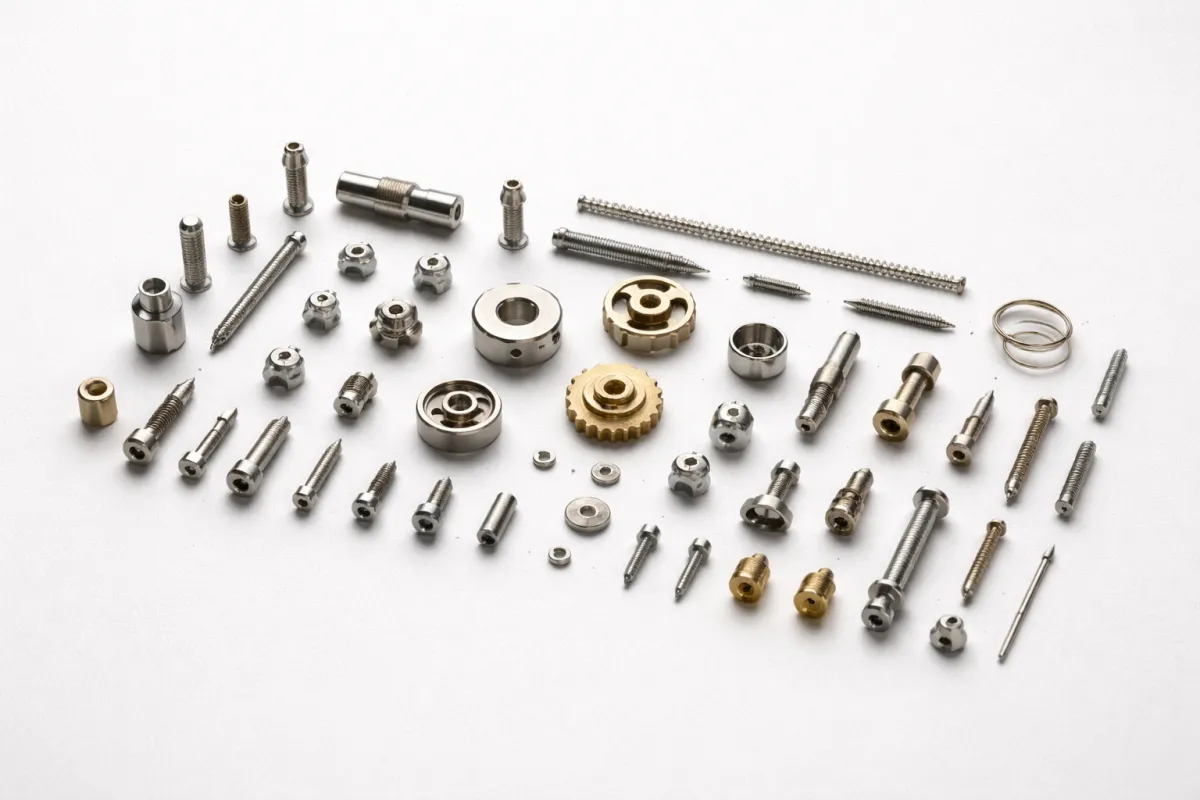
If we imagine the body like a house, micronutrients are not the decoration. They are the screws, the wiring, the small structural elements that hold everything together. Without them, the structure does not collapse immediately — it weakens quietly.
Energy production, detoxification, immune regulation, stress response — all of these processes depend on molecular presence, and on balance.
Today, we hear more about cellular health. We see more supplements. We hear more biohacking conversations. And yet, awareness does not automatically equal understanding.
When we start thinking in orthomolecular terms, a few things become clear:
More is not automatically better.
Quality matters.
Context matters.
Individual variability matters.
Structure matters.
We can know what is beneficial — and still apply it without coherence. Just like in other areas of life.
And this is where systems thinking becomes relevant again.
Health is not isolated. It is layered.
There is the biochemical layer. There is the nervous system layer. There is perception, stress, rhythm, and environment. There are signals we sometimes sense long before we can measure them.
Some of us explore lab diagnostics. Some of us observe patterns. Some of us use structured supplementation.
Different methods. One intention: understanding the system more deeply.
Even the best formulation does not replace understanding. And even the best intention does not replace structure.
Orthomolecular thinking invites us to zoom in — to the molecular level.
Systems thinking invites us to zoom out — to the whole.
Perhaps the real shift is not in what we add. But in how intentionally we support what already exists.
Be well
Tina
