The negotiation that was never about the price
In 2006, Disney bought Pixar for 7.4 billion dollars.
Many people remember the number.
The number was never the hard part.
Bob Iger had just become CEO of Disney. Animation was faltering. The partnership with Pixar was ending over a distribution fight. Iger believed the fastest way to fix Disney Animation was to buy Pixar outright.
First he had to convince one person.
Steve Jobs.
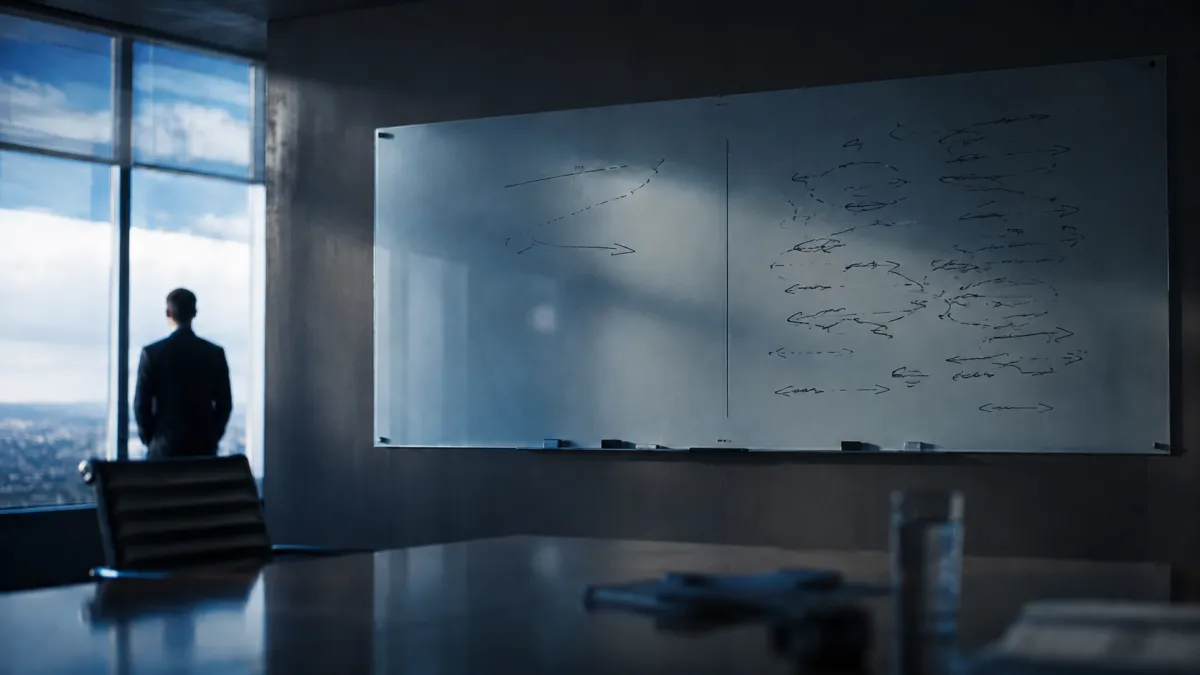
They met in Northern California. Iger remembers a long whiteboard in the room. The two of them built a list together. Pros on one side. Cons on the other.
About three pros. About twenty cons.
Iger looked at the board and said the deal was probably dead. Jobs looked at the same board and asked a different question.
"Why do you conclude that?"
He was not counting. He was weighing. The few pros, he said, mattered more than all the cons. Both companies would be stronger together than apart.
That was the first signal.
Two people read the same board. One saw arithmetic. One saw essence.
Then came the part that closed the deal.
Iger had spent years negotiating with creative people. He knew what they protect.
Not a guess. Not a theory. A pattern he had watched hold, deal after deal. Creative people guard their independence the way others guard money.
So he listened for where Jobs spent his energy.
Jobs did not fight hardest over the price. He fought over the people. He wanted Pixar to keep its name, its building, its culture. He wanted the team left alone to do the work.
Iger read that. And he built the deal around it. He later said he and Jobs spent more time on the human questions than on the financial ones.
This is what reading a signal looks like in a real room.
The terms on the table were money. The signal underneath was trust. Most rooms negotiate the visible terms. The visible terms are not the only place the deal is decided.
Iger noticed where the other side's attention went. He treated that as the negotiation.
There is one more piece, and it came first.
Before any talk of buying Pixar, Iger approached Jobs with something smaller. He proposed putting Disney shows on Apple's iPod. A modest deal. Done in days.
It told Jobs something words could not. That Iger would move, take a risk, and keep his word.
The trust was built before the big conversation started.
The deal closed in 2006. Jobs became Disney's largest individual shareholder and joined the board. Pixar kept its name and its home in Emeryville. Both studios thrived.
Iger used the same approach again. With Marvel. With Lucasfilm.
Results in negotiation are not a coincidence.
The price was visible to everyone in the room. The signal was visible to the person who was paying attention.
That is the part we can learn. We can train ourselves to notice where the other side's energy goes. And to treat that as the conversation that matters.
Be well, Tina
