Nina's Story - The Doctor
How to Be Perfectly Fine While Falling Apart
Chapter 6: The Doctor

Nina parks the car and takes a deep breath before stepping out. The air feels crisp, the kind that quietly reminds you to slow down. She spots Sabrina waiting in front of the building - calm, smiling, the kind of presence that feels grounding.
“Ready?” Sabrina asks. “As ready as I’ll ever be,” Nina answers with a half-smile.
They walk in together - two women, both holding stories of fatigue, curiosity, and hope.
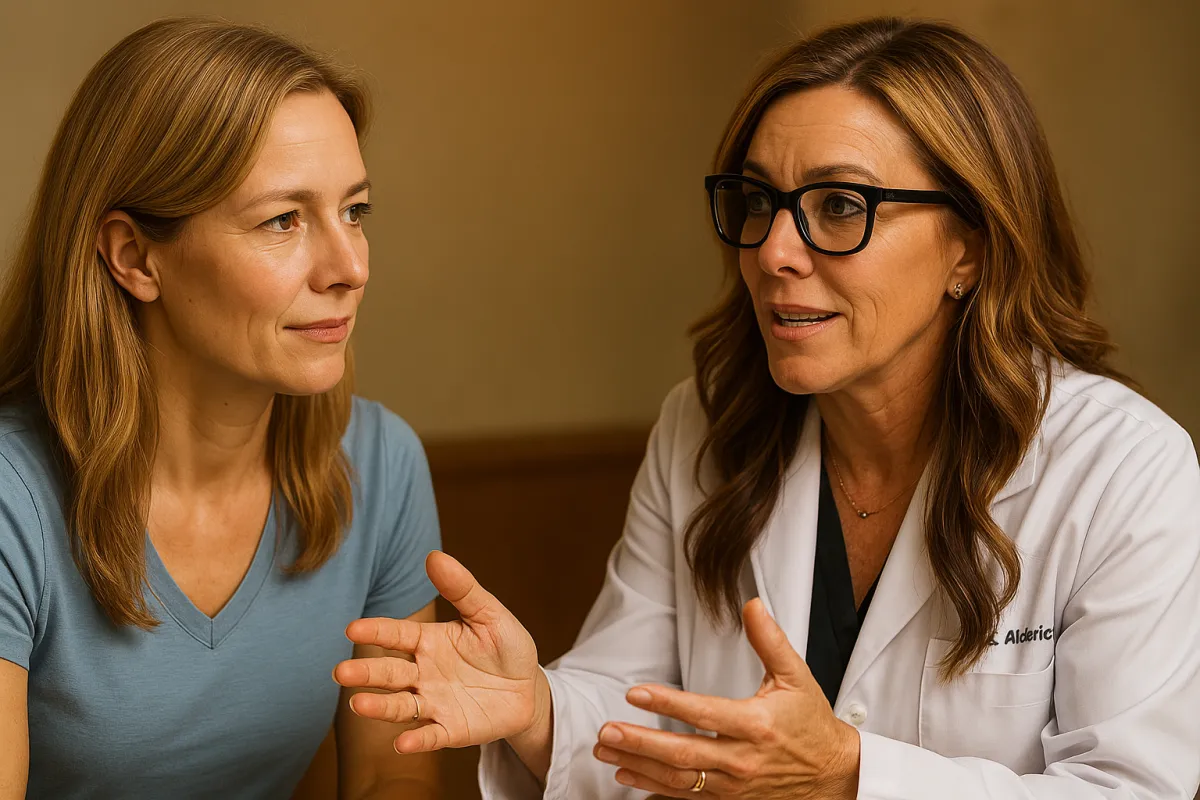
The doctor greets them warmly, with the kind of calm that immediately fills the room. Her voice is steady, her presence focused - not in a hurry, not distracted. It feels unusual for Nina. She’s used to people rushing.
After a few minutes of small talk, the doctor leans forward slightly, looking at Nina: “How often do you clean your house?” Nina blinks, surprised by the question. “Every day,” she says. “Two kids, a dog… it’s constant.”
“Why?”
Nina laughs softly. “Because otherwise it’s chaos. Dirt, dog hair, crumbs, the usual. It piles up fast.”
“And what would happen if you didn’t?”
“Dust, smell, mess everywhere. Probably disease. No one could breathe.”
The doctor nods. Then she pauses, letting the silence hang for a second - like she’s giving Nina space to see where this is going.
“Now imagine,” she says, “your body as a city made of cells. You’re the mayor - for your lifetime. What happens if you stop leading it?”
Nina smiles faintly. “I guess… it falls apart?”
“Exactly,” the doctor continues. “The streets clog, waste isn’t removed, communication between districts breaks down. Energy plants fail, defense systems weaken. And the city starts to struggle. That’s what happens inside us when we don’t support the body’s natural cleaning and repair systems.”
She leans back slightly. “The good news is - you can influence it. You decide what comes in, and what goes out. The body knows what to do. It just needs support sometimes.”
She looks at Sabrina, then back at Nina.
“Sabrina already gave you information about the products. Think of them as tools for your city - they don’t fix it, they support it. The real miracle is your body. It knows how to restore itself when it gets the right help.”
Nina nods slowly. “So… where do I start? How do I get the garbage out of my city?”
The doctor smiles.
“We start with Detox-Drops, they are like a vacuum cleaner for your cells. They help your body safely bind and remove what doesn’t belong - heavy metals, toxins, residues from the environment or medicine. They work gently, so the systems can handle it. You don’t need to force anything. The goal isn’t to stress the city - it’s to reopen the pathways.”
Nina listens, intrigued. She feels the logic behind it. Not a miracle pill - a process.
“Then comes restoring the gut,” the doctor continues. “That’s your gardener. It nourishes the soil - your gut - where everything begins. It calms inflammation, helps balance digestion, and supports nutrient absorption. When your gut is stable, your body starts communicating again.”
“And then” she adds, “your radio technician. It helps the signals between your cells - the neurotransmitters - flow clearly again. That’s why focus improves, and mood balances. It’s like restoring the communication lines and charging the batteries in your city.”
Nina leans back. It all sounds surprisingly simple. Logical. Almost obvious.
The doctor continues, softly.
“This isn’t about replacing your body’s intelligence. It’s about creating the right conditions for it to do what it already knows. And when that happens - energy, focus, even emotions - they all start to align.”
Nina nods, slowly processing. “So I start with cleaning, then restoring, then balancing the communication?”
“Exactly,” the doctor says. “Observe, take notes, see what changes. Your body will tell you what it needs.”
Nina glances at Sabrina - she smiles back, reassuringly. For the first time in a while, Nina feels something she hasn’t felt in months.
Hope.
She doesn’t say much more - she just sits there for a moment, quietly breathing. The idea of being the mayor of her own city somehow makes sense now.
She thinks of her mother, still recovering. Of her kids, her work, her own energy. And she silently decides -it’s time to start leading again.
